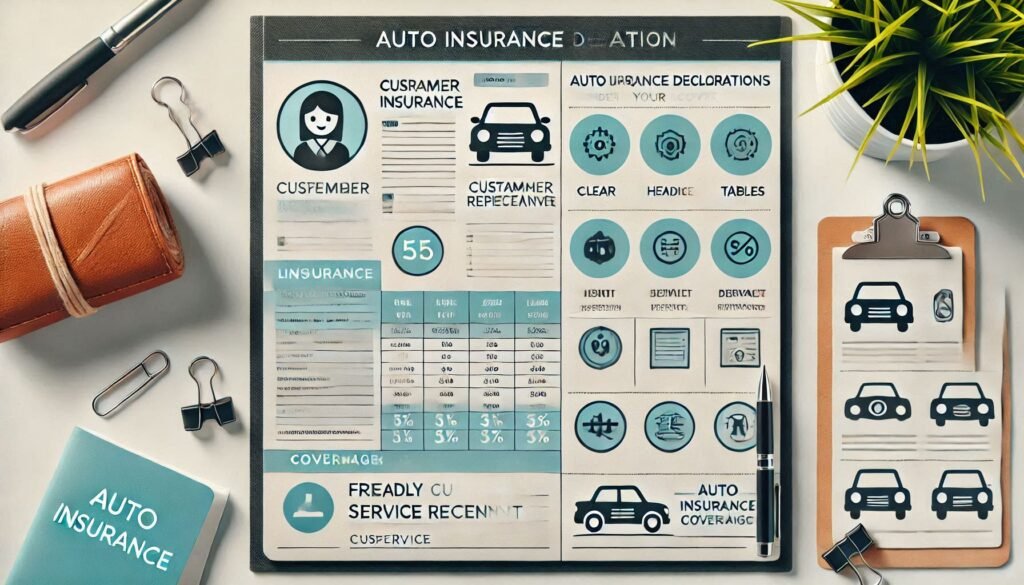
When you purchase auto insurance, one of the most critical documents you’ll receive is the auto insurance declaration page. This document serves as a summary of your policy, outlining the key details, coverage, and costs associated with your insurance. Understanding the declarations page is essential for verifying your coverage and avoiding surprises in case of a claim.
In this guide, we’ll break down everything you need to know about the auto insurance declarations page, how to read it, and why it matters.
What is an Auto Insurance Declarations Page?
The auto insurance declarations page, often referred to as the “dec page,” is a concise overview of your insurance policy. It’s usually included on the first page of your insurance packet and provides the essential details of your coverage.
What does an auto insurance declaration page Contain?
The declarations page typically includes:
- Policyholder Information: Your name, address, and contact details.
- Policy Details: Policy number, effective dates, and covered vehicles.
- Coverage Types and Limits: A breakdown of your coverage (e.g., liability, comprehensive, collision).
- Premium Costs: The total cost of your policy and payment schedule.
This document acts as a quick reference for policyholders and insurers alike, ensuring transparency and accuracy.

Why is the Auto Insurance Declarations Page Important?

The auto insurance declarations page is more than just a summary—it’s your roadmap to understanding your policy. Here’s why it’s vital:
Verifies Your Coverage
Before an accident or claim, it’s crucial to know what your policy covers. The declarations page ensures you’re aware of your coverage limits and exclusions.
Helps in Case of Disputes
If there’s ever a disagreement with your insurer, your declarations page serves as a reference point for resolving conflicts about your coverage.
Assists When Shopping for Insurance
When comparing policies, your current declarations page can help you understand what to look for in a new policy, ensuring you’re comparing apples to apples.
When do I need my auto insurance declaration page?
To use in the event of an accident or other covered events if your insurance agent is unavailable, everyone with auto insurance should have a copy of their auto declarations page on hand. You can decide whether to file a claim by using the declarations page to see what damage is covered and what limitations will apply.
When it’s time to renew your policy, it’s also helpful to have your declarations page close at hand so you can examine and evaluate your coverage and determine whether any adjustments are necessary. For instance, you should ensure that your lender is removed from your coverage if you have paid off your auto loan. Or maybe you wish to cut or increase your coverage limits for your comprehensive policy based on your vehicle’s current worth. You may also use it to compare your current policy information to bids from other insurers while shopping around for a better bargain.
How to Read an Auto Insurance Declaration Page.

Understanding the information on your declarations page can seem overwhelming, but breaking it down into sections helps.
Section 1: Policyholder Information
This section includes:
- Name and Address: Your contact information as the primary insured.
- Policy Number: A unique identifier for your insurance policy.
- Insurance Company Contact: Details for reaching out to your insurer.
Section 2: Policy Details
Here, you’ll find:
- Policy Period: The start and end dates of your coverage.
- Insured Vehicles: A list of all cars covered under the policy, including their VINs.
Section 3: Coverage Breakdown
The most critical part of the page, this section lists:
- Liability Coverage: Protects against bodily injury and property damage claims.
- Comprehensive and Collision: Covers damage to your car from accidents, theft, or weather events.
- Medical Payments: Covers medical expenses for you and passengers.
- Uninsured/Underinsured Motorist: Protects against drivers without sufficient insurance.
Section 4: Premium Costs
This part outlines:
- Total Premium: The cost of your policy.
- Breakdown by Coverage: Costs associated with each type of coverage.
- Discounts Applied: Any savings, such as for bundling policies or having a clean driving record.
Common Questions About the Auto Insurance Declarations Page
1. Is the Declarations Page the Same as Proof of Insurance?
No, the auto insurance declarations page provides a detailed summary of your policy, while proof of insurance is a simple document confirming your coverage for legal purposes.
2. What Should I Do if There’s an Error on My Declarations Page?
Contact your insurance provider immediately to correct inaccuracies, such as misspelled names or incorrect coverage limits.
3. Can I Use My Declarations Page for Car Registration?
Some states allow it as proof of insurance, but others require a specific insurance card.
How to Use Your Auto Insurance Declarations Page.

Your declarations page isn’t just for filing away—it’s a practical tool for various scenarios:
Comparing Policies
When shopping for a new policy, use your declarations page to ensure you’re selecting comparable coverage options and limits.
Filing a Claim
In the event of an accident, reference your declarations page to verify your coverage and ensure you’re filing a valid claim.
Updating Your Policy
If you purchase a new vehicle or need to add a driver, use your declarations page as a guide for making updates.
Tips for Managing Your Auto Insurance Declarations Page
- Keep it Accessible: Store a digital or physical copy where it’s easy to retrieve.
- Review Annually: Check for errors or outdated information at renewal time.
- Ask Questions: Contact your insurer if you’re unsure about any details.
Conclusion
An auto insurance declarations page is a powerful tool for understanding and managing your policy. By learning to read and use it effectively, you can make informed decisions, avoid costly mistakes, and ensure you have the right coverage.
Whether you’re comparing policies, filing a claim, or just reviewing your coverage, the declarations page is your go-to resource. Always keep it handy, review it regularly, and don’t hesitate to reach out to your insurer with questions.




Great blog you’ve got here.. It’s difficult to find excellent writing like yours these days. I seriously appreciate individuals like you! Take care!!
Thank you so much for the kind words! 😊 I really appreciate you taking the time to read and share your thoughts. I’m glad the post offered a fresh perspective and added value for you. Comments like this truly make the effort worthwhile — thanks again for the encouragement!
Hiya! Quick question that’s totally off topic. Do you know how to make your site mobile friendly? My site looks weird when browsing from my apple iphone. I’m trying to find a template or plugin that might be able to correct this issue. If you have any suggestions, please share.